By Linda Weiford, WSU News
Twenty years ago today, Washington State University became an official ally of Northwest Indian tribes.
Recognizing the unique sovereign governments of six regional Native American tribes, WSU entered an agreement to increase educational services and opportunities to Native American peoples.
Among other things, the historic memorandum of understanding, signed Nov. 8, 1997, created a tribal liaison position and the Native American Advisory Board to the President.
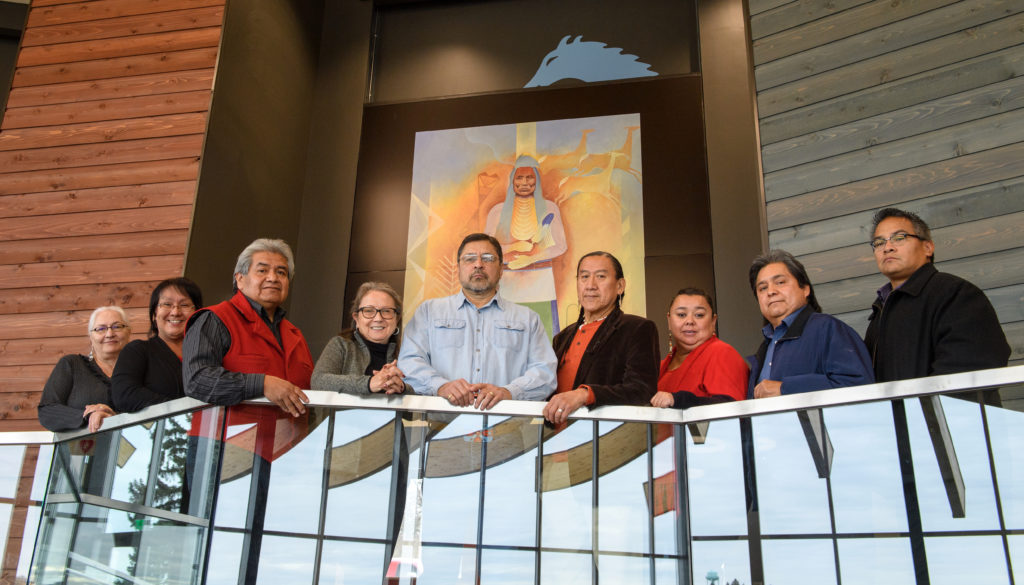
How fitting, then, that the Native American Advisory Board convened today under the roof of the new Elson S. Floyd Cultural Center, which embodies Plateau people’s culture, including the Nez Perce. The building’s girder beams represent Nez Perce basket weaving and the roof’s undulating shape evokes rolling hills of the Palouse – the ceded homeland of the Nez Perce tribe.
(Photos by Robert Hubner, WSU Photo Services)
“The fact that the Native American Advisory Board can now meet in a structure that offers tangible recognition of the region’s First People is significant to us,” said Barbara Aston, Director and Special Assistant to the Provost/Tribal Liaison and a member of the Wyandotte Nation of Oklahoma.
What’s more, today’s board meeting was held during Native American Heritage Month, a time to think more deeply about the profound ways that indigenous people have influenced America’s development.
When Aston started her job at WSU 30 years ago, “the country did little to recognize its original habitants,” she explained.
These days, the federal government formally recognizes November as Native American Heritage Month, and the day after Thanksgiving as Native American Heritage Day. Two dozen states – including Washington — have declared it
a legal holiday as well. Washington is home to 29 federally-recognized Indian tribes.
“Nationally and statewide, it is important to honor our First Americans and to recognize their contributions and sacrifices,” said WSU President Kirk Schulz. “They have helped shape the political, social and environmental framework of the nation and of Washington state.”
Close to 600 students of Native American ancestry attend WSU, said Aston. Moreover, since 1997, six more regional tribes have joined the memorandum of understanding with the university, raising the total to 12 tribal organizations.
When Americans gather for the classic Thanksgiving feast on Nov. 23, Aston hopes they’ll appreciate what Native Americans brought to the table.
“Native Americans farmed most of the staples that make up the Thanksgiving meal, from sweet potatoes, pumpkins and corn to the turkey centerpiece. In fact, they cultivated wild turkeys long before the first Thanksgiving in 1621,” she said.